
ADHD Brain Hacks: Neuroscience-Backed Digital Tools That Actually Work
Discover the best ADHD brain hacks backed by neuroscience. Learn how digital tools and reward-based strategies can boost focus, motivation, and time management.
Elias J. Mitchell
10/25/20255 min read


Hacking Your ADHD Brain with Neuroscience-Backed Digital Tools
Do you ever feel like you're fighting a war against your own brain? You make a plan, but your brain refuses to follow it. You set a goal, but your brain gets distracted by something shiny. You know exactly what you should do, but you end up doing the exact opposite.
It’s an exhausting, frustrating, and deeply personal battle. For years, as an author and researcher in this space, I’ve listened to people describe this struggle. They use words like "broken," "lazy," and "defective." They believe the problem is them.
What if I told you the problem isn't you, but your strategy? What if, instead of fighting your brain, you could learn to hack it?
"Hacking" Isn't Magic—It's Just Using a Better User Manual
The term "brain hacking" can sound like a gimmick, like a quick-fix promise from a late-night infomercial. But that’s not what I’m talking about.
In this context, hacking the ADHD brain means something specific and powerful. It means you stop trying to force your brain to be something it's not. Instead, you get curious about its unique "source code"—its fundamental wiring. You learn its rules, its preferences, and its loopholes. Then, you use that knowledge to create clever workarounds and build systems that use your brain's natural tendencies to your advantage.
It's not about changing your brain; it's about changing the way you interact with it. It’s about finally getting the right user manual for your specific hardware.
The "Source Code" We're Hacking: 3 Core Principles from Neuroscience
This isn't guesswork. This approach is built on a solid foundation of ADHD science. We now have a clear blueprint of the ADHD brain's operating system. To effectively "hack" it, we need to target three core features.
The Time Blindness Hack: Making Time Visible and Tangible
The Glitch: The ADHD brain struggles with "time blindness," an inability to intuitively sense the passage of time. Time is an abstract concept that often feels invisible, leading to missed deadlines and a constant state of surprise at the clock.
The Hack: You don't try to "feel" time better. You make it impossible to ignore. You use neuroscience-backed ADHD tools that turn time into a physical, visual object. A visual timer that shows a shrinking red disc doesn't ask your brain to track time; it shows your brain time disappearing. This externalizes the function your brain struggles with internally.
The Working Memory Hack: Offloading Your Brain's RAM
The Glitch: The ADHD brain often has a more limited working memory, which is like a computer's active RAM . Trying to hold your to-do list, appointments, and ideas in your head leads to cognitive overload, anxiety, and forgotten details.
The Hack: You stop using your brain as a storage device. You build an "external brain" using digital tools. Every task, idea, and appointment is immediately offloaded to a trusted external system (like a task manager or note-taking app). This frees up your precious mental RAM for what it does best: creative thinking and problem-solving. This is the ultimate ADHD cognitive hacking technique.
The Motivation Hack: Speaking Your Brain's Native Language (Dopamine)
The Glitch: The ADHD brain's motivation system is primarily fueled by the neurotransmitter dopamine, and it requires a higher level of interest, novelty, or urgency to produce it . Boring, routine tasks often don't provide enough dopamine to get the "engine" started.
The Hack: You become a "dopamine dealer" for your own brain. You stop relying on discipline and start injecting your tasks with the stimulation your brain craves. You use digital tools to turn a boring task into a game, race against a timer, or break it down into a series of small, satisfying "wins."
Your Digital Toolkit: The "Hardware" for Your Brain Hacks
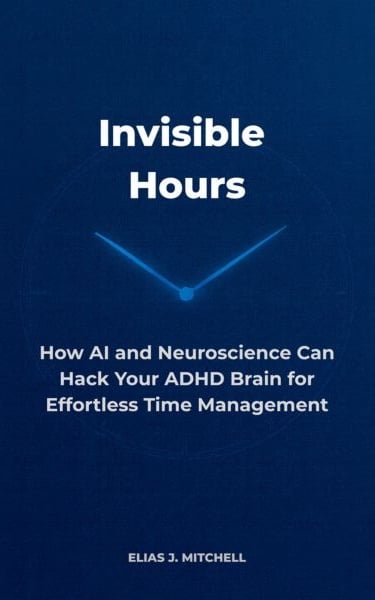
This is the central idea I explore in my book, Invisible Hours: we live in the first moment in history where our neuroscience digital tools are smart enough to execute these hacks for us.
Tools to Externalize Time (Visual Timers & Smart Calendars)
These are your primary tools for hacking time blindness. Apps like TimeTimer or visual countdowns on a smart watch don't just tell you the time; they show you the shape of your time. Smart calendars with multiple, intrusive alerts act as an external timekeeper that you can't ignore.
Tools to Build an External Brain (Note Apps & Task Managers)
This is your hack for working memory overload. A system built with tools like Trello, Asana, or even just a well-organized notes app becomes your external RAM. The key is to create a seamless, low-friction system for capturing information so that offloading becomes an automatic reflex.
Tools to Gamify Your Focus (AI & Focus Apps)
This is how you hack your motivation system. Apps like Forest turn focus into a game where you grow a tree. AI assistants can help you reframe a boring to-do list into an exciting "quest log." These tools aren't gimmicks; they are sophisticated neuroscience ADHD brain tools that speak your brain's native language.
Your Guide to Becoming a Master Hacker of Your Own Mind
This approach is a profound shift from a life of fighting yourself to a life of clever, compassionate collaboration with your own mind. It’s about accepting the brain you have and then using the incredible tools at your disposal to build a life where it can thrive.
You don't need to be a tech wizard or a neuroscientist to do this. You just need a new perspective and a guide to show you the first few steps. You have the ability to become the master hacker of your own mind.




Ready to Stop Fighting Your Brain and Start Hacking It?
This isn't about forcing your brain to change; it's about learning its "source code" and using that knowledge to your advantage. The tools and the science are finally here.
In my book, Invisible Hours: How AI and Neuroscience Can Hack Your ADHD Brain for Effortless Time Management, I'll give you the complete "hacker's manual." It's a step-by-step guide to using neuroscience-backed digital tools to unlock your brain's full potential.
Elias J. Mitchell writes about time management, productivity, and mindset, blending practical strategies with the smart use of AI to help readers work smarter and live better.