
ADHD Time Management AI: The Neuroscience Breakthrough Changing Everything
Discover how ADHD time management AI is transforming focus and productivity. Explore the neuroscience behind this breakthrough technology built for the ADHD brain.
Elias J. Mitchell
10/31/20255 min read

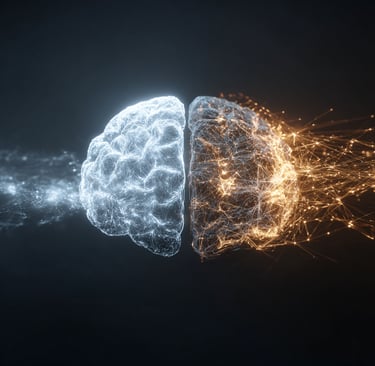
The Neuroscience-AI Breakthrough That's Changing ADHD Lives
For decades, if you have an ADHD brain, your relationship with productivity has likely been a story of frustration. A story of missed deadlines, lost hours, and a growing collection of abandoned planners and forgotten apps.
I call this the "graveyard of failed systems". It’s a place many of us know well. We’ve tried every new methodology, downloaded every promising app, and bought every beautiful planner with the fierce hope that this would be the one to finally fix us. And every time, we ended up with another relic for the graveyard and a heavier cloak of shame, convinced that we were the problem.
As an author who has spent years immersed in this world, I'm here to tell you that a profound shift is happening. The era of blaming ourselves is over. We are living at the intersection of two powerful, parallel revolutions that are culminating in a true neuroscience AI ADHD breakthrough—and it’s changing everything.
A Remarkable Intersection: Two Revolutions Are Happening Right Now
For the first time in history, two incredible forces have converged, creating a perfect storm of opportunity for the ADHD community. On one hand, neuroscience is giving us an unprecedentedly clear picture of the ADHD brain. On the other, Artificial Intelligence is giving us unprecedentedly powerful tools.
Separately, they are fascinating. Together, they are transformative. This AI neuroscience revolution is not a futuristic fantasy; it's a practical, accessible reality that is finally offering us a new way forward.
The First Revolution: Neuroscience Gives Us the "Why" (The Blueprint)
For too long, ADHD struggles were seen as character flaws or moral failings. We were "lazy," "undisciplined," or "not trying hard enough." Neuroscience has shattered those myths.
From a "Character Flaw" to a Clear Brain Architecture
Thanks to advances in neuroimaging and research, we no longer have to guess. We now have a clear blueprint of the ADHD brain's unique wiring. We can see the differences in the prefrontal cortex, our brain’s command center for executive functions . We understand the crucial role of dopamine as the brain’s motivation fuel and why our systems process it differently.
Finally Understanding Time Blindness, Dopamine, and Working Memory
This blueprint explains the "why" behind our biggest struggles. It gives us a scientific vocabulary for our lived experiences.
Time Blindness: We now know this isn't carelessness; it’s a genuine perceptual difference tied to our brain's internal clock.
Task Paralysis: We understand this isn't laziness; it's a neurochemical traffic jam in our motivation pathways.
Working Memory Overload: We know that forgetting things isn't a sign of low intelligence; it’s a function of having a smaller mental "RAM" or workspace .
Neuroscience gave us the gift of understanding. It proved that we're not broken; we're just running on a different operating system. But for a long time, we had the blueprint but no tools to build with. That has now changed.
The Second Revolution: AI Gives Us the "How" (The Toolkit)
While neuroscience was mapping the brain, another revolution was happening in our pockets and on our desks. Technology, and specifically Artificial Intelligence, was becoming astonishingly smart, personal, and adaptive.
Beyond Simple Alarms: The Rise of Intelligent, Personalized Tools
For years, "ADHD tech" meant little more than a simple calendar alarm. It was a blunt instrument. Today's AI-powered tools are different. They can learn our patterns. They can adapt to our needs. They can function less like a nagging alarm clock and more like a compassionate, on-demand executive assistant. This is the ADHD breakthrough technology we’ve been waiting for.
The Power of Automation and Cognitive Offloading
The real power of modern AI is its ability to reduce our cognitive load. We can now use AI to automate routine tasks, transcribe our spoken thoughts, sort our chaotic brain-dumps into organized lists, and even help us reframe our negative self-talk .
We can use these tools to build an "external brain," a digital scaffold that handles the very executive functions we struggle with. This isn't a crutch; it's a smart allocation of resources. We are finally able to offload the immense burden of remembering, organizing, and planning, freeing up our brilliant brains to do what they do best: create, innovate, and solve complex problems.
The Breakthrough: Where the Blueprint Meets the Toolkit
Here is the heart of the breakthrough: We are the first generation that can take the detailed blueprint from neuroscience and use the intelligent toolkit of AI to build truly personalized, effective solutions.
This is the central thesis of my book, Invisible Hours. We are no longer guessing. We can now build systems with intention:
Because neuroscience tells us we struggle with time blindness, we can use AI-powered visual timers and smart calendars to make time tangible and visible.
Because neuroscience tells us our motivation is dopamine-driven, we can use AI to help us gamify our tasks and reframe boring work into exciting "quests."
Because neuroscience tells us our working memory is limited, we can use AI to build a seamless external brain that captures every thought and task, eliminating our fear of forgetting.
This AI neuroscience integration is the game-changer. It’s a move from a one-size-fits-all approach to a deeply personalized one, using science as our guide and technology as our construction crew.
You Are the Architect of Your Own Breakthrough
This revolution isn't happening in a lab; it's happening on your phone and your laptop. It's accessible, practical, and ready for you to harness.
You no longer have to feel like a victim of your own brain. You can become the architect of your own support system. By understanding the blueprint and learning to wield the new toolkit, you can design a life that doesn't just accommodate your ADHD, but celebrates its strengths. This is the path to a true ADHD life transformation.
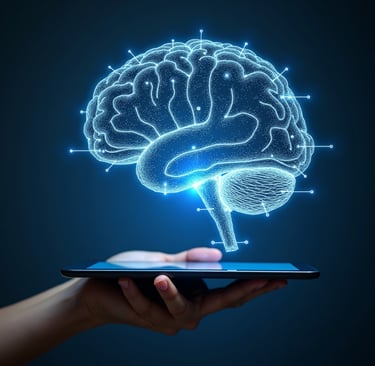


Ready to Harness This Breakthrough in Your Own Life?
This isn't science fiction; it's a practical, accessible revolution that's available to you right now. You don't have to wait for the world to catch up to your brain's needs.
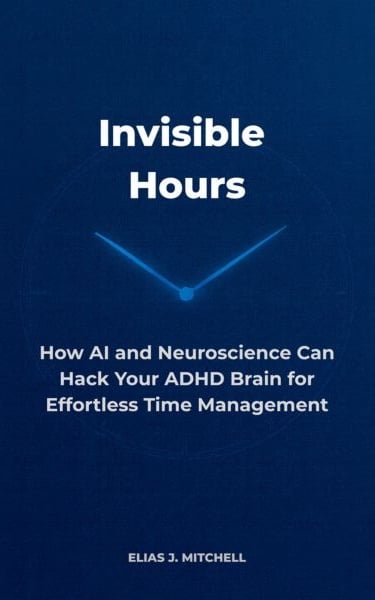
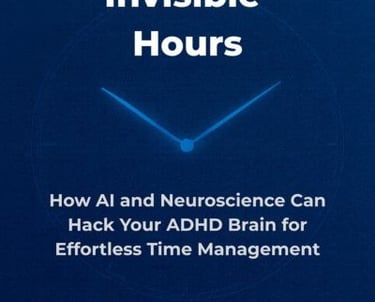
In my book, Invisible Hours: How AI and Neuroscience Can Hack Your ADHD Brain for Effortless Time Management, I bridge the gap between the neuroscience blueprint and the AI toolkit, giving you a step-by-step guide to building your own breakthrough system.
Elias J. Mitchell writes about time management, productivity, and mindset, blending practical strategies with the smart use of AI to help readers work smarter and live better.