
ADHD Working Memory: Why You Lose Track of Time
Ever forget a deadline seconds after thinking of it? It's not you—it's ADHD working memory overload. Learn how this cognitive load impacts your perception of time.
Elias J. Mitchell
10/17/20256 min read


Working Memory Overload: The Hidden Reason You Can't Keep Track of Time
You're in the middle of writing an important email. A thought pops into your head, crystal clear and urgent: “I have to remember to call the pharmacy before 5 PM.” You make a firm mental note. This is important. You will not forget.
You finish the email, hit send, and then… what was that thing you were supposed to remember? It was right there, a bright, flashing neon sign in your mind. Now, there’s just a vague, frustrating haze. The thought hasn’t just faded; it’s vanished completely.
If this scenario feels painfully familiar, you're not forgetful, flaky, or failing. You're experiencing a core feature of the ADHD brain in action: working memory overload. In my work exploring neuroscience-backed productivity, this is one of the most common and confidence-crushing challenges I see. People blame their character when they should be looking at their cognitive architecture.
This "vanishing thought" phenomenon isn’t just about forgetting to buy milk. It’s the hidden culprit behind why hours, appointments, and deadlines seem to disappear into thin air.
Meet Your Brain's RAM: What is Working Memory, Exactly?
To understand what’s happening, let’s use a simple analogy. Think of your brain as a powerful computer. Your long-term memory is the hard drive, where you store vast amounts of information. But working memory is your computer's RAM (Random Access Memory).
RAM is the temporary, active workspace your computer uses to run programs. It's the mental countertop where you place the ingredients you're cooking with right now. It's where you hold a phone number in your head as you walk across the room to find your phone. It’s a small, limited, but critically important space for processing real-time information.
Every conscious task—reading, listening, planning, problem-solving—requires RAM. And just like a computer, your brain’s RAM has a finite capacity.
The ADHD Bottleneck: Not a Lack of Memory, But a Lack of Space
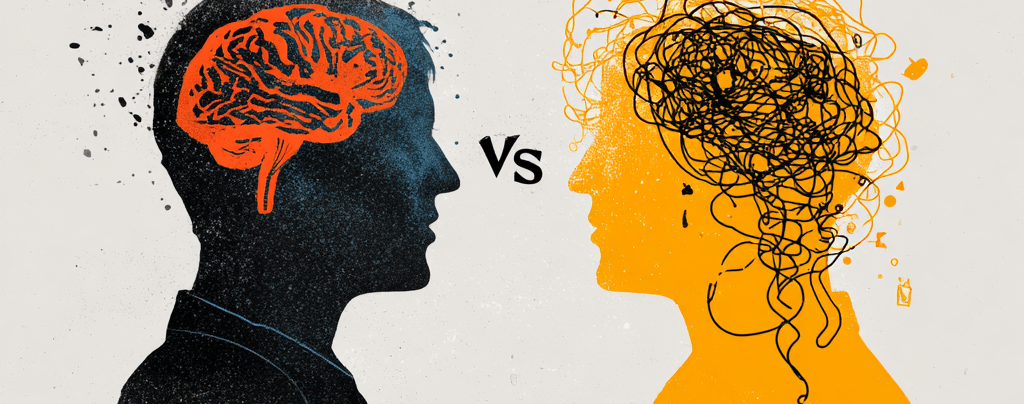
Here is the crucial distinction that modern neuroscience has clarified for us: the ADHD memory challenges you face are rarely a problem with your long-term hard drive. You can likely recall obscure movie quotes from 20 years ago with perfect clarity. The difference lies in the size and function of your RAM.
Research suggests the ADHD brain’s working memory is like a computer with less available RAM. It’s not broken; it just has a smaller active workspace. A neurotypical brain might have 16 GB of RAM, while an ADHD brain might be working with 8 GB or even 4 GB on a stressful day.
The Constant Juggle of a Limited Mental Workspace
With less RAM, your brain is forced to constantly juggle which "programs" to keep open. Every new piece of information—an email notification, a question from a coworker, a new idea—competes for a precious slot in your active memory.
This is why multitasking can feel so overwhelming. You're trying to run too many programs on limited hardware, which leads to the system slowing down, freezing, or "crashing"—that feeling of your brain just shutting down from cognitive overload.
Why "Remembering the Time" Is the First Task to Get Dropped
Here’s where it all connects to time management. Keeping track of time—maintaining a background awareness of the clock and your upcoming schedule—is not a passive activity. It’s an active mental program that takes up a slot in your working memory.
When you're deeply engaged in an interesting task, that task is a resource-heavy program that uses up almost all your available RAM. To keep it running smoothly, your brain’s operating system makes a pragmatic choice: it closes the least stimulating background program. And what's less stimulating than the abstract concept of "4:30 PM"?
The thought "I have a meeting in 30 minutes" gets jettisoned to free up processing power. You don’t consciously decide to forget; your brain’s architecture makes the decision for you. This is the very essence of working memory time management—or the lack thereof.
How Cognitive Overload Directly Causes Time Blindness
This working memory bottleneck is a primary driver of time blindness. When your mental RAM is full, you literally don't have the cognitive capacity to perceive the passage of time.
You're not just ignoring the clock; you're running a system that doesn't have the resources to even check it. This is why you can look up from a task and be genuinely shocked by the time. Your brain wasn't "running the clock program" for the last two hours. It had to close that program to make room for something more immediate and stimulating. The result is a constant state of surprise and a feeling of being perpetually behind.
Stop Trying to Hold It All: The Life-Changing Power of an "External Brain"
For years, the advice has been to "try harder to remember." This is like telling someone to magically install more RAM in their brain. It’s impossible and only leads to shame when it fails.
The real solution is compassionate, strategic, and profoundly effective: if your internal RAM is limited, you must build a powerful external brain. You have to stop asking your brain to hold information and instead create a system that does the holding for you. This is a central theme in my book, Invisible Hours.
From a Mental Notepad to a Digital Scaffold
An external brain isn't one magic app. It's a personalized "digital scaffold"—a collection of simple, reliable tools that serve as your external RAM.
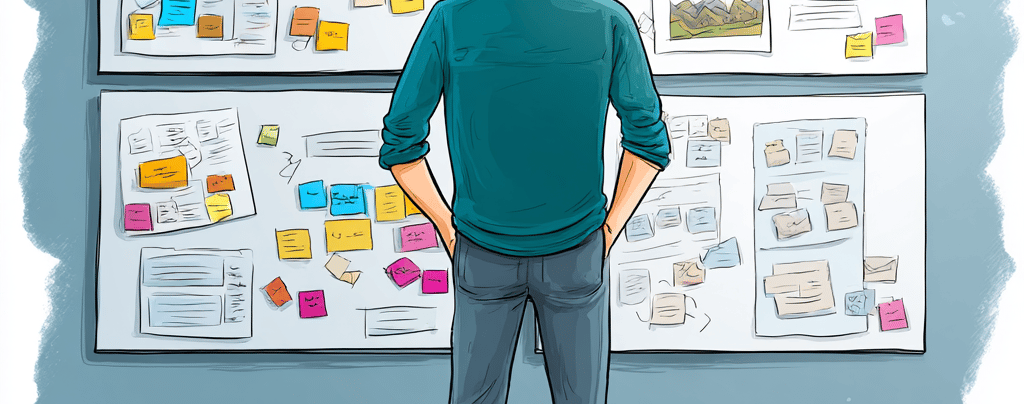
Instead of trying to remember your to-do list, you offload it to a tool like Trello or a physical whiteboard.
Instead of trying to remember appointments, you let your Google Calendar hold them for you, with multiple, impossible-to-ignore alerts.
Instead of trying to remember when to switch tasks, you use a visual timer that shows you the passage of time physically.
The Instant Relief of a Clearer Mind
When you commit to offloading the mental burden, the effect is immediate. It’s like closing 20 unnecessary tabs on your computer. Suddenly, your brain has processing power again. The background hum of anxiety—the constant fear of forgetting something important—starts to fade.
You free up your precious working memory to do what it does best: solve problems, think creatively, and be present in the moment, rather than using all its energy just trying to hold on.
Building Your Own Cognitive Support System
You are not flawed for having a brain with limited RAM. You are just a person who needs a better support system. Building this system is the most transformative work you can do to improve your relationship with time and productivity.
It’s about choosing the right "external hard drives" for your life and developing the habit of using them consistently. It's about giving your powerful-but-overtaxed brain the support it has needed all along.


Is Your Brain's RAM Constantly Crashing?
You can't upgrade your brain's hardware, but you can give it a powerful external hard drive. Stop blaming yourself for ADHD memory challenges and start building a system that does the heavy lifting for you.
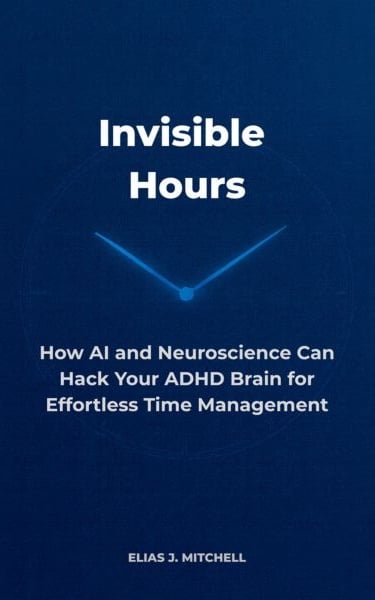
In my book, Invisible Hours: How AI and Neuroscience Can Hack Your ADHD Brain for Effortless Time Management, I'll show you exactly how to build a "digital scaffold" to offload the cognitive burden and free up your mind for what truly matters.
Elias J. Mitchell writes about time management, productivity, and mindset, blending practical strategies with the smart use of AI to help readers work smarter and live better.